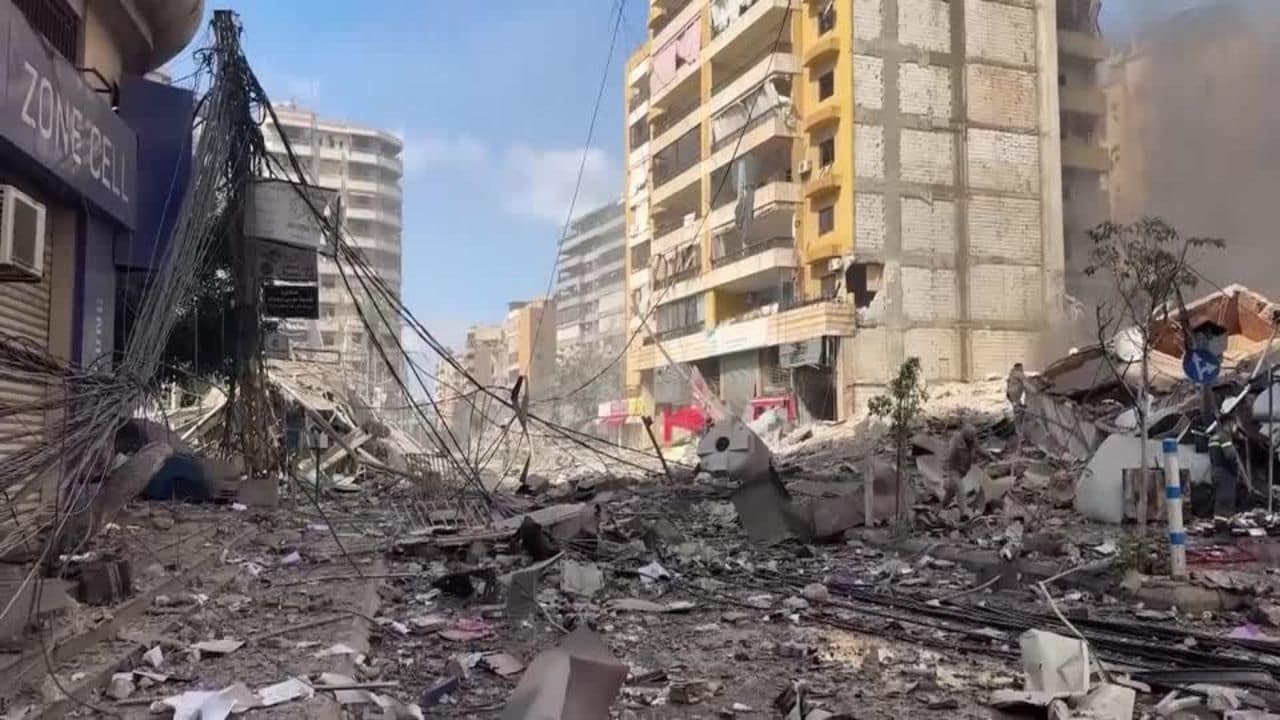
Geopolitics isn't a buffet. You don't get to pick the hummus and leave the olives. Yet, the current diplomatic chatter surrounding a potential ceasefire between Iran and the United States suggests that Washington can somehow "carve out" Lebanon from the broader regional architecture.
The media is obsessed with a binary question: Does an Iran-US ceasefire include Lebanon or not? This is the wrong question. It assumes that Hezbollah is a franchise that can be shut down while the corporate headquarters stays open. It assumes that Tehran views its survival and its "Forward Defense" doctrine as two separate line items.
They aren't. They are the same breath.
The Myth of the Independent Lebanese Front
Conventional wisdom—the kind found in beige think-tank reports—suggests that Lebanon is a "theatre" that can be calmed through specific, localized mediation. This is a fundamental misunderstanding of the Unity of Fields strategy.
When analysts ask if a deal with Iran covers Lebanon, they are looking for a legalistic clause in a document that doesn't exist. The reality is that the "Axis of Resistance" operates on a principle of integrated escalation. You cannot have a "cold" border in the Persian Gulf and a "hot" border in Southern Lebanon simultaneously for any meaningful duration.
I have watched diplomats waste decades trying to treat Hezbollah as a domestic Lebanese problem. It is a strategic error. Hezbollah is the crown jewel of Iran’s extraterritorial power. Expecting Iran to sign a de-escalation agreement with the West while allowing its primary deterrent against Israel to be dismantled—or even sidelined—is like asking a person to stop fighting while handing over their shield.
The Deterrence Trap
Why is the "Is Lebanon included?" debate so persistent? Because it serves a domestic political purpose for everyone involved.
- For the US: It allows the administration to claim they are "containing" the conflict.
- For Iran: It provides a "gray zone" where they can apply pressure without triggering a direct state-on-state war.
- For Israel: It creates a window to demand "separation" that will never actually materialize.
Let's look at the math of deterrence. If Iran agrees to a ceasefire that excludes Lebanon, they essentially give Israel a free hand to settle the "Northern Front" on its own terms. Tehran knows this. They will never formally decouple the two because Lebanon is the only leverage they have that actually keeps Tel Aviv awake at night.
If there is no Lebanon in the deal, there is no deal. Anything else is just a temporary pause for reloading.
The "Proxy" Misnomer
Stop using the word "proxy." It implies a lack of agency and a master-slave relationship that doesn't reflect the sophisticated coordination on the ground. Hezbollah is an organic part of the Iranian security apparatus.
When people ask, "Will Iran force Hezbollah to stop?", they are missing the point. Hezbollah is the Iranian strategy. The weapons, the training, and the ideological DNA are one and the same. To include Lebanon in a ceasefire isn't a policy choice; it’s a biological necessity for the survival of the Iranian regime's regional posture.
The Economic Illusion
The "lazy consensus" says that because Iran is hurting economically, they will trade their Lebanese influence for sanctions relief. I’ve spent years analyzing the flow of illicit capital in the Levant, and I can tell you: the Revolutionary Guard will let the Iranian people eat grass before they surrender the land bridge to the Mediterranean.
The "Lebanon-inclusive" ceasefire is a ghost. If the US grants sanctions relief, it fuels the very network that sustains Hezbollah. If the US denies it, the "resistance" ramps up in Lebanon to force the US back to the table. It is a circular firing squad where the only person getting hit is the one trying to mediate.
The Strategic Reality of the "Northern Front"
Imagine a scenario where a piece of paper is signed in Geneva or Doha that explicitly mentions Lebanon. Does the firing stop?
No. Because the "rules of engagement" in Southern Lebanon are dictated by the survival of the Assad regime in Syria and the stability of the Islamic Republic itself. Lebanon is the "Strategic Depth" of Iran. You cannot negotiate away someone’s lungs.
The common misconception is that Lebanon is a bargaining chip. It’s not. It’s the bank.
The Inevitability of Integration
Every time a "limited" ceasefire is proposed that ignores the Lebanese-Israeli border, it fails within weeks. Why? Because the regional actors know what the Western media refuses to admit: the Middle East is a single, interconnected circuit. You flip a switch in Tehran, and the lights go out—or come on—in Beirut.
The push to "de-link" Lebanon from the Iranian nuclear or regional file is a vestige of 1990s diplomacy that has no place in 2026. We are dealing with a unified military doctrine.
Stop Asking the Wrong Question
Instead of asking if Lebanon is "included," ask if the US is prepared to accept an Iranian-led order in the Levant. That is the actual trade-off.
If you want a ceasefire in Lebanon, you have to satisfy Iran’s core security requirements. If you want to squeeze Iran, you have to accept a war in Lebanon. There is no middle path where you get peace in the Galilee while starving the IRGC in Tehran.
The diplomacy of the last five years has been a masterclass in denial. We pretend that these fronts are separate so we can announce "victories" that last for a news cycle.
The truth is colder. The Iran-US ceasefire is the Lebanon ceasefire. They are two names for the same beast. You cannot kill one without the other, and you certainly cannot pet one while the other is biting your hand.
Accept the integration, or prepare for the explosion. There is no "Lebanon-only" exit ramp.