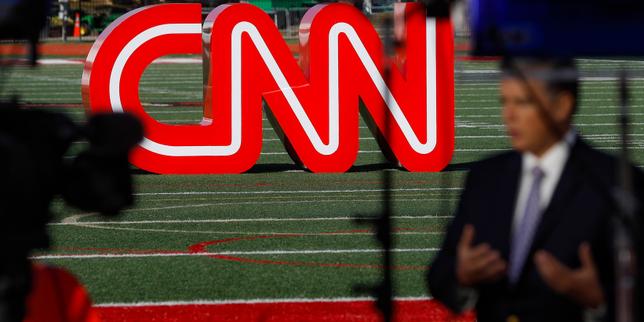
The sale of Warner Bros. Discovery to the Paramount-Skydance conglomerate marks the end of CNN as an independent editorial powerhouse. While the press release glosses over "efficiencies" and "global reach," the reality on the ground in Atlanta and New York is far more grim. David Ellison and his financial backers are not in the business of subsidizing a money-losing prestige asset. They are in the business of debt reduction. For CNN, a network already reeling from years of identity crises and plummeting linear ratings, this merger is not a lifeline. It is a liquidation event disguised as a corporate synergy.
The fundamental problem lies in the math. The combined debt load of the new entity is staggering, and the high-yield interest environment makes carrying that weight impossible without aggressive pruning. CNN represents a massive overhead—thousands of employees, expensive global bureaus, and aging infrastructure—that no longer fits the lean, tech-focused model Skydance favors. The network is being stripped for its parts to satisfy creditors, leaving its journalistic mission as an afterthought in a spreadsheet-driven war for survival.
The Myth of the Neutral Middle
For years, the leadership at CNN tried to pivot back to a "non-partisan" center, hoping to recapture an audience that had migrated to more ideological corners of the dial. It failed. By trying to please everyone, they became essential to no one. Now, under the thumb of a studio-heavy owner like Skydance, the pressure to maintain a "brand-safe" environment will only intensify. This is the death of the adversarial edge.
Investment bankers do not like lawsuits. They do not like controversy that scares off advertisers or complicates international distribution for film franchises. When a news organization becomes a small subsidiary of a massive entertainment machine, the investigative budget is the first thing to get cut. Why fund a six-month deep dive into corporate corruption when that same money can produce three hours of low-cost panel discussions about viral videos? The incentive structure has shifted from breaking news to avoiding friction.
The editorial independence that once defined the network is now a liability. In the Skydance era, CNN is being repositioned as a content feed for a streaming platform, not a primary destination for news. This transition requires a "softening" of the product. Hard-hitting journalism is expensive, risky, and slow. Commentary is cheap, safe, and fast. The choice for the new board of directors is obvious.
The Ghost Bureau Problem
One of the most immediate casualties of the Paramount-Skydance takeover is the network's international footprint. CNN’s global reach was always its greatest flex—the ability to put a camera in a conflict zone within hours. But maintaining dozens of overseas bureaus is an astronomical expense that the new ownership sees as a relic of the cable era.
We are seeing the rise of the "Ghost Bureau." This involves closing physical offices, firing local producers, and relying on freelance "stringers" or AI-driven aggregation to cover global events. It looks the same on a smartphone screen, but the institutional knowledge is gone. When you lose the person who has lived in a region for twenty years, you lose the ability to tell the truth about that region. You are left with a superficial narrative that parrots official government statements because there is no one on the ground to challenge them.
This isn't just a cost-cutting measure; it is a fundamental shift in how reality is reported. The new owners view news as "information products" rather than a public service. In this framework, a war in Eastern Europe is only worth covering as long as the engagement metrics justify the satellite time. Once the clicks drop, the cameras move.
Linear Television is a Sinking Lifeboat
The obsession with cable carriage fees has blinded CNN’s leadership to the fact that their primary delivery mechanism is dying. The Paramount-Skydance deal is essentially a bet that they can move these legacy brands into a single streaming app before the cable bundle completely evaporates. But news is a difficult fit for the "on-demand" world.
Most people watch news because it is happening now. Streaming platforms are built for "whenever." This friction creates a massive problem for a 24-hour news cycle. If the new owners fold CNN into a broader streaming service alongside Mission Impossible and SpongeBob, the news brand loses its identity. It becomes just another tile in a sea of content.
Furthermore, the data suggests that streaming audiences do not go to entertainment apps for news. They go to social media or specialized niche sites. By tethering CNN to a massive entertainment merger, the owners are tying a stone to a drowning man. They are betting on a platform-centric future while the audience is moving toward a creator-centric one.
The Talent Exodus and the Salary Cap
The era of the $20 million-a-year news anchor is over. One of the quietest but most impactful changes under the new regime is the implementation of a strict salary ceiling for on-air talent. As contracts come up for renewal, the stars who defined the network's face for the last decade are being told to take massive pay cuts or walk.
This isn't about fiscal responsibility. It is about control. High-profile anchors with massive followings have leverage; they can push back against editorial mandates. By replacing them with younger, cheaper, and more compliant "personalities," the new ownership ensures that the corporate line is never questioned. The result is a homogenized, bland broadcast that lacks the authority of the past.
The talent that remains is being asked to do more with less. Producers are being replaced by automated systems. Writers are being asked to "optimize" stories for search engines rather than accuracy. The soul of the newsroom is being replaced by an algorithm designed to keep the "average time on page" as high as possible.
The Content To Commerce Pipeline
Perhaps the most cynical aspect of the Skydance strategy is the integration of commerce into the newsroom. There is a growing push to turn every news story into a transaction. If a reporter is covering a climate crisis, the sidebar will suggest "sustainable products" to buy. If they cover a travel story, the link leads to a booking partner owned by a subsidiary.
This blurring of the line between reporting and retail is the ultimate goal of the modern media merger. They aren't selling news; they are selling an audience to advertisers in the most direct way possible. When the metric of success for a news story is how many affiliate links were clicked, the journalism is already dead.
This "shoppable news" model is the inevitable conclusion of a debt-burdened merger. Every square inch of the screen must be monetized. The tragedy is that the viewers often don't even realize they are being sold a product under the guise of being informed. It is a betrayal of the basic contract between a news organization and its public.
The Illusion of Choice in a Consolidated Market
The Paramount-Skydance acquisition of Warner Bros. Discovery is part of a broader, dangerous trend of media consolidation. When three or four companies own everything we see, hear, and read, the "marketplace of ideas" becomes a monopoly. CNN was one of the last major players with the resources to act as a check on power. Now, it is just another asset in a portfolio.
This consolidation creates a feedback loop. The owners want to protect their interests, so the news becomes less critical of corporate power. The audience senses the bias and loses trust. The ratings drop, leading to more budget cuts, which leads to even lower quality news. It is a death spiral that ends with a public that is both uninformed and deeply cynical.
The real losers here aren't the executives who will walk away with multi-million dollar "change of control" bonuses. The losers are the citizens who rely on a free and functional press to make sense of the world. We are watching the infrastructure of truth being dismantled in real-time to pay off the interest on a corporate loan.
A Strategy for the Future
If CNN is to survive as anything more than a brand name on a dead app, it must break away from the "legacy media" mindset. It cannot be a junior partner in an entertainment conglomerate. It needs to return to its roots as a scrappy, aggressive, and independent news gatherer that doesn't care about corporate "synergy."
This would require a radical restructuring:
- Decentralize the newsroom: Move away from the expensive New York and Atlanta hubs and empower local journalists with high-quality mobile gear.
- Kill the "Panel of Pundits": Stop paying professional partisans to shout at each other and use that money for investigative units.
- Transparency as a Brand: Open up the editorial process. Show the sources. Admit when you're wrong. Build trust through radical honesty rather than "neutrality."
The current path—the Skydance path—leads to a world where CNN is just a background noise in an airport lounge, a flicker of motion on a screen that no one is actually watching. The brand has value, but that value is being drained by owners who see it as a liability to be managed rather than a treasure to be guarded.
The dismantling of CNN is a warning. It shows what happens when we treat news as a commodity rather than a pillar of democracy. Once the reporters are gone and the bureaus are closed, you can't just flip a switch and bring them back. The institutional memory of a great news organization is fragile. Once it's broken, it's gone forever.
Watch the next round of "restructuring" very closely. Pay attention to who leaves and which bureaus are shuttered. The map of the world as seen through the lens of the new CNN is getting smaller every day. This is the price of the merger. This is the cost of "efficiency."
Demand to see the budget for the investigative unit.


