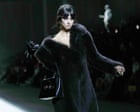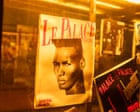
The neon ghost of Les Bains Douches is twitching back to life, but the Paris it intends to haunt no longer exists. For decades, the site at 7 rue du Bourg-l’Abbé served as the raw, beating heart of European decadence—a place where Mick Jagger could hide in plain sight and Grace Jones defined the visual language of the 1980s. Now, under the direction of heir and entrepreneur Jean-Pierre Marois, the venue is attempting a high-stakes pivot back to its disco roots. This isn’t just a club reopening. It is a calculated gamble on whether the grit and spontaneity of the twentieth century can be manufactured and sold to a twenty-first-century audience that views "partying" through the sterile lens of social media metrics.
The original Les Bains wasn't built on a business plan. It was a happy accident of history, a former municipal bathhouse turned into a cultural melting pot where the scent of expensive perfume mingled with the stench of chlorine. The reopening seeks to capture that "crazy, without limits" energy, but the modern reality of Parisian real estate, noise ordinances, and the commodification of "cool" suggests a much steeper climb than the promoters admit.
The Myth of the Unfiltered Night
In 1978, the formula was simple: high fashion, low inhibitions, and a guest list curated by the legendary Marie-Line. You didn't pay to get in; you were chosen. The club acted as a sanctuary for the global elite because it offered something that has become extinct in the modern era: total, unrecorded privacy. When David Bowie or Joy Division walked through those doors, they weren't content creators. They were people looking to disappear.
Today’s nightlife industry operates on the exact opposite principle. For a venue like the new Les Bains to survive the crushing overhead of a post-pandemic economy, it requires visibility. It needs the "check-in." It needs the filtered photo. Therein lies the central paradox of the project. To be truly "limitless" and "crazy" in the vein of the 1980s, a club must be dangerous and unpredictable. But the investors funding a multi-million-euro renovation in the heart of the Marais district generally don't have an appetite for danger. They want predictable luxury, high-margin bottle service, and a controlled environment that feels like a rebel outpost while maintaining the safety of a five-star hotel.
The new iteration isn't just a dance floor. It is a hybrid ecosystem featuring a boutique hotel and a high-end restaurant. This "lifestyle" approach is a survival mechanism. Relying solely on the whims of the nightclub crowd is a recipe for bankruptcy in a city where the "in" spot changes every six months. By diversifying, Marois is protecting the asset, but he is also diluting the brand. You cannot be the most dangerous club in Europe when you also have to worry about the breakfast reviews on TripAdvisor.
The Architecture of Nostalgia
Walking through the doors today, the aesthetic cues are all there. The famous tiling remains, a cold reminder of the building’s functionalist past. The design team has worked to preserve the "Bains" DNA, but there is a polished sheen to everything that feels slightly uncanny. It’s the difference between a vintage leather jacket found in a thrift store and one bought for four figures at a luxury boutique. Both look the part, but only one has the history.
The struggle for the new Les Bains will be attracting the "creative class" that gave the original its soul. In the 80s, a struggling artist could feasibly rub shoulders with a billionaire. Now, the Marais is one of the most expensive pockets of real estate on the planet. The demographic has shifted from creators to consumers. If the dance floor is filled exclusively with tech consultants and luxury tourists, the "limitless" energy the owners are chasing will remain a marketing slogan rather than a reality.
The Noise of Gentrification
Paris is a city of layers, and the layer currently on top is one of strict regulation. The original Les Bains Douches operated in a Wild West atmosphere. The neighbors were either part of the party or too powerless to stop it. In 2026, the legal landscape is a minefield of decibel limits and safety codes.
- Soundproofing Costs: Modern acoustic engineering is a massive capital expenditure. To keep the bass thumping without triggering a police shutdown requires a literal room-within-a-room construction.
- The VIP Ceiling: There is a limit to how many high-net-worth individuals want to sweat in a basement.
- The Competition: Nearby hubs like Pigalle have already claimed the "gritty-chic" crown, leaving Les Bains to fight for a legacy spot that might be too dusty for the new generation.
The business model of the "legendary" club reopening usually follows a predictable arc. There is a massive opening night fueled by legacy names and nostalgia. This is followed by a three-month period of high demand as the curious and the social-climbers cycle through. The real test comes at the six-month mark. When the glitter fades, does the venue have a resident DJ scene, a unique cocktail program, or a "vibe" that justifies the premium prices? Or is it just a museum where you can buy an expensive drink?
The Grace Jones Factor
We often talk about these clubs through the names of their famous patrons. Mentioning Grace Jones or Jean-Michel Basquiat isn't just about celebrity gossip; it’s about what those people represented. They were disruptors. They didn't just attend the party; they transformed the space through their presence.
The current celebrity culture is different. It is managed by publicists and governed by brand deals. A modern "star" visiting Les Bains is likely there as part of a coordinated appearance or a cautious night out. The era of the "unhinged" celebrity night is over, killed by the smartphone camera. To compensate, the club has to manufacture "moments" through lighting, performance art, and carefully curated "surprises." It is theatrical rather than organic.
Can Cool Be Inherited?
Jean-Pierre Marois is in a unique position. He didn't just buy the brand; he is the son of the man who bought the building in the 1960s. This gives him a level of genuine passion that a corporate venture capital firm would lack. He isn't just looking for an ROI; he is looking to validate a family legacy.
However, "cool" is perhaps the only thing that cannot be passed down through a will. It is a lightning-strike phenomenon. The original Les Bains captured the specific anxiety and exuberance of the Cold War's final decade. It was a response to a world that felt like it might end at any moment. The current era has its own anxieties—climate change, economic instability, political polarization—but the response is different. The youth are more sober, more cautious, and more interested in wellness than in 4:00 AM chlorine-scented benders.
The club’s success hinges on its ability to define what "luxury" means in this new context. If it’s just gold leaf and velvet ropes, it will fail. If it can find a way to offer a sense of genuine, uncurated freedom, it might just become the center of the world again. But that requires a level of hands-off management that is almost impossible when you have millions of euros on the line.
The Strategy of Exclusivity
To win, Les Bains must lean into its role as a gatekeeper. In an age of total accessibility, the only thing people truly crave is what they can't have. The door policy needs to be more than just "expensive clothes." It needs to be an editorial decision.
- Reject the Mainstream: Curate lineups that favor experimental sounds over radio hits.
- Enforce the No-Phone Rule: This is the only way to recreate the 80s sanctuary feel. If you take a photo, you're out.
- Bridge the Gap: Use the hotel and restaurant to fund the club's risks. Let the club be the loss leader that creates the "aura" for the rest of the business.
The ghost of the bathhouse is back, but it's wearing a tailored suit and checking its watch. The owners say they want to be "without limits," but the modern world is nothing but limits. The true test of Les Bains Douches won't be the celebrity turnout on opening night; it will be whether or not a person can still walk in there and lose themselves completely. In 1985, that was easy. In 2026, it might be the most expensive thing on the menu.
Audit your expectations before you go. This isn't a time machine; it's a revival. If you're looking for the ghost of Mick Jagger, you're forty years too late. If you're looking for a very expensive, very well-designed night out in a building that once mattered, you're exactly where you need to be.