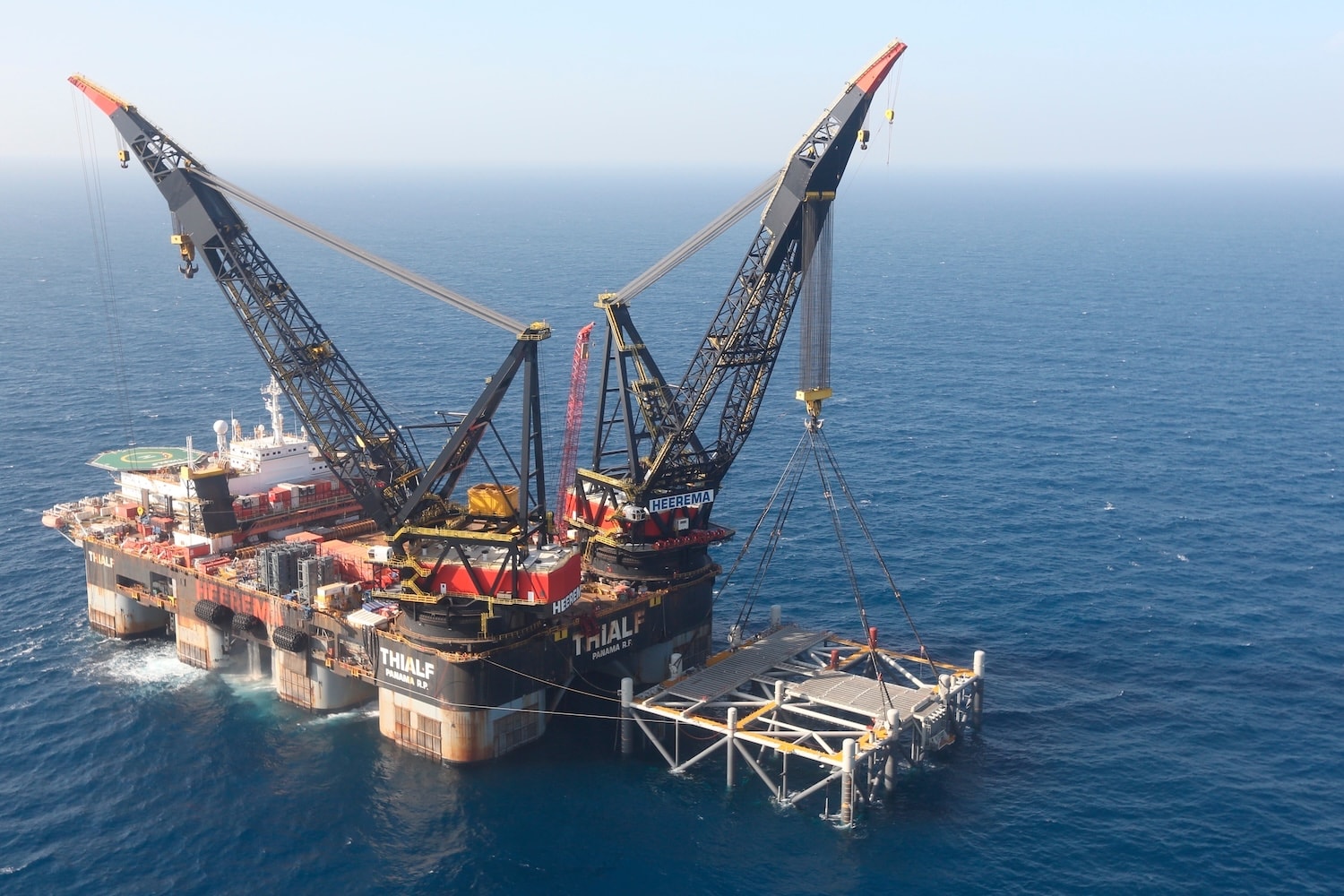
The sea off the coast of Ras Laffan does not care about global markets. It is a shifting, restless expanse of turquoise that hides the most complex plumbing system on the planet. Deep beneath that water, a network of steel and sensors pulls natural gas from the earth, chills it until it turns into a frigid liquid, and pumps it into the bellies of massive ships. These ships are the mechanical red blood cells of the modern world. They carry the warmth that keeps a grandmother in Berlin from freezing and the power that keeps a semiconductor factory in Seoul from going dark.
But sometimes, the machines stop.
When QatarEnergy recently halted production at several of its Liquefied Natural Gas (LNG) trains, the ripple wasn't just felt in boardrooms. It was felt in the sudden, sharp intake of breath from energy traders who realized that a "guaranteed" supply had just vanished. To explain why, the company reached for a dusty, ancient legal shield: force majeure.
The Ghost in the Contract
In the sterile light of a corporate office, force majeure is just a clause. It is a French term, literally meaning "superior force." It is the "Act of God" section that everyone skims over until the lightning actually strikes.
Imagine a hypothetical logistics manager named Elena. She sits in a high-rise in Tokyo, responsible for ensuring her utility company has enough gas to last through a predicted cold snap. She has a contract. It is signed, sealed, and backed by billions of dollars. In her mind, that contract is a physical bridge between Qatar’s North Field and her customers' heaters.
Then comes the phone call.
The bridge is gone. Not because of a lack of will, but because of a "superior force." In the case of QatarEnergy, the official word was "technical issues"—a vague, clinical phrase that masks the sheer chaos of a massive industrial breakdown. When a multi-billion dollar LNG facility suffers a critical failure, it isn't like a blown fuse in a kitchen. It is a cascading nightmare of pressure imbalances, cryogenic leaks, or structural fatigue that makes operation physically impossible.
The force majeure declaration is the moment the lawyers admit that humans are no longer in control. It is a legal "time-out." It tells the buyer, "We know we promised you this gas, and we know you need it, but the universe has intervened, and we are legally absolved of our failure to deliver."
Why the World Holds Its Breath
Qatar is not just another player in the energy game; it is the heartbeat of it. Along with the United States and Australia, it forms the triumvirate of gas supply. When the North Field—the largest non-associated natural gas field on the planet—has a hiccup, the global price of electricity does not just rise. It jumps.
The technical breakdown at the world's most sophisticated LNG facility is a reminder that our entire modern existence is balanced on a thin, frozen wire. LNG must be kept at a temperature of approximately -162°C (-260°F) to remain a liquid. This requires an enormous, energy-intensive infrastructure that defies nature. At these temperatures, metal becomes as brittle as glass.
When a "technical issue" leads to force majeure, it is a confession of vulnerability. It is a sign that even with all the wealth in the Persian Gulf and all the engineering talent of the 21st century, we are still at the mercy of the machines.
The Human Cost of a Blown Valve
Consider a different character. Not a lawyer or a trader, but someone like Aris, who owns a small factory in Greece that produces ceramics. He needs a steady, predictable supply of natural gas to keep his kilns at a constant, searing heat. If the gas flow stops, the kilns cool. If they cool too quickly, the ceramics crack. The work of weeks is ruined.
Aris does not read the trade press. He does not know what force majeure means in a legal sense. All he knows is that the gas he was promised for October is not arriving. He is told that there is a global shortage because of a breakdown halfway across the world. He looks at his bank account and his employees. He sees the invisible stakes.
When QatarEnergy invokes this clause, they aren't just protecting their balance sheet from lawsuits. They are resetting the expectations of an entire planet. The "superior force" isn't always a hurricane or a war. Sometimes, it is simply the failure of a single, crucial valve or the wear and tear of a pump that has been running too hard for too long.
The Ripple Effect of a Technical Failure
What happens when a supply chain snaps? It is a slow-motion car crash.
- The Spot Market Scramble: Buyers who were expecting those Qatari ships suddenly find themselves short. They rush to the open market to buy whatever they can find, often at double or triple the price.
- The Tanker Traffic Jam: Ships that were slated to dock in Ras Laffan are diverted. They circle the ocean, burning fuel, while their captains wait for news.
- The Reservoir Realignment: On the production side, the gas cannot just be "turned off" like a kitchen faucet. It has to go somewhere. If the cooling trains aren't working, the gas has to be re-injected or flared into the atmosphere—a literal burning of money.
This isn't a minor inconvenience. It is a fundamental disruption of the trust that keeps the world's lights on. Force majeure is the ultimate test of that trust. It is the moment a seller says, "I cannot fulfill my promise, and the law says you cannot punish me for it."
The Invisible Stakes of Energy Security
We live in an age where we take for granted the invisible hum of the power grid. We assume that when we flip a switch, the light will come on. We assume that because we have a contract, we have a guarantee.
QatarEnergy's recent struggles are a cold shower for those who believe that technology has conquered risk. The North Field expansion is an engineering marvel, a project of such scale it is difficult to fathom. It represents a bet on a future where gas is the "bridge fuel" that takes us away from coal and toward a cleaner world. But that bridge is only as strong as its weakest weld.
The "superior force" in this story is not a god or a storm. It is the inherent fragility of a global system that relies on a handful of locations to provide the lifeblood of our civilization. When those locations fail, the legal terminology doesn't heat the homes. It doesn't power the factories. It only provides a quiet, sterile excuse for the cold.
A contract is a human invention. A massive industrial failure is a physical reality. When the two collide, the physical reality always wins. Force majeure is the sound of the human world surrendering to the physical one.
The blue flame that flickers on a stove in a suburb of London or a high-rise in Shanghai is more than just a chemical reaction. It is a fragile connection to a place thousands of miles away, where a machine is humming, a ship is loading, and a lawyer is watching for the next sign that the superior force has returned.
The lights stay on, for now, but the silence from the North Field is a reminder of how easily they could go out.
The sea continues to hit the shore at Ras Laffan, indifferent to the contracts, the lawsuits, and the desperate need of a world that cannot stop moving.