The romanticized image of the lone Colombian coffee farmer, hand-picking red cherries on a mist-covered hillside, is a lie designed to sell $5 lattes to guilty Westerners. While critics mourn the "loss" of traditional coffee plantations to the green gold of avocados, they ignore a brutal reality. Coffee in Colombia is a dying business model kept on life support by nostalgia and exploitation.
If you think avocados are "invading" the Andes, you haven't looked at a balance sheet lately. The transition isn't an environmental tragedy. It is a necessary economic purge.
The Myth of the Sacred Coffee Bean
Most journalists covering the shift from Coffea arabica to Persea americana treat coffee as a cultural heirloom that must be protected at all costs. This ignores the fact that coffee was never indigenous to Colombia; it was a colonial export crop that became a commodity trap.
For decades, small-scale farmers have been at the mercy of the C-market price in New York. When the price of coffee drops below the cost of production—which happens with sickening regularity—the farmer starves. When the price rises, middle-men and exporters capture the bulk of the profit.
The "traditional" coffee farm is often a site of generational poverty. Here is the math the critics won't tell you:
- A hectare of coffee might yield a net profit of $500 to $1,000 in a good year.
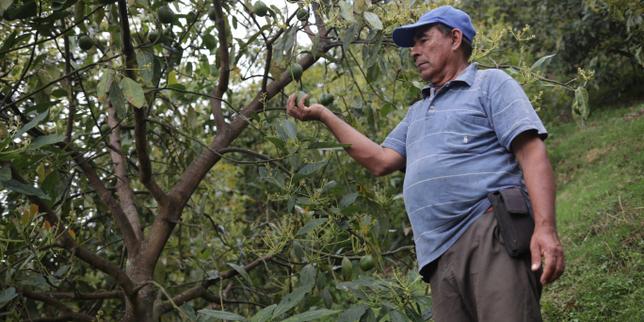
- A mature hectare of Hass avocados can net between $5,000 and $10,000.
To demand that farmers stick to coffee for the sake of "landscape preservation" is to demand they remain poor so your vacation photos look better. It is economic voyeurism disguised as environmentalism.
Water Hysteria and the Misuse of Data
The most common attack against avocado cultivation is its water usage. The "lazy consensus" dictates that avocados are water vampires sucking the mountains dry. This is a classic case of taking data from the drought-stricken orchards of Chile or the industrial monocultures of California and blindly applying it to the Colombian tropical highlands.
In the Quindío or Antioquia regions, the problem isn't a lack of water; it’s the management of an absolute abundance of it. Colombia has some of the highest precipitation rates on the planet.
| Crop | Average Water Requirement (L/kg) | Context |
|---|---|---|
| Coffee | ~18,900 | High footprint due to intensive processing/washing. |
| Avocados | ~2,000 | Varies by climate; significantly lower in high-rain zones. |
| Beef | ~15,000 | Standard global average. |
When you look at the life-cycle analysis, coffee processing is actually one of the most water-polluting activities in the Colombian countryside. The "honey water" (aguas mieles) from de-pulping coffee cherries often ends up in local streams, stripping them of oxygen and killing aquatic life. Avocados, by contrast, are harvested and shipped. They don't require the massive on-site industrial washing that turns coffee farms into localized pollution centers.
Biodiversity is Not Found in Monoculture Coffee
The argument that avocados are destroying biodiversity is laughable to anyone who has actually stepped foot in a commercial coffee plantation. Modern, high-yield coffee is grown in "sun-grown" conditions. This means every other tree is cleared to maximize coffee density. It is a biological desert of short, stumpy bushes.
The avocado tree is a massive, carbon-sequestering canopy tree. An avocado orchard looks significantly more like a natural forest than a sun-grown coffee field ever will.
I’ve spent time on these mountains. I’ve seen the transition. When a farmer replaces exhausted coffee shrubs with Hass avocado trees, they are effectively reforesting their land with a taller, more robust canopy. This provides better soil stabilization on the steep Andean slopes, reducing the risk of the landslides that frequently bury coffee-growing communities during the rainy season.
The "Hass" Gold Rush is Professionalizing the Peasantry
The competitor's narrative suggests that big corporations are "chasing" small farmers out. The reality is that the avocado industry is finally bringing professional standards to Colombian agriculture.
Coffee has survived on informal labor—seasonal migrants moving from farm to farm with no social security, no fixed contracts, and zero upward mobility. The avocado industry, driven by strict export requirements for the EU and US markets, requires:
- GlobalGAP Certification: This forces farmers to track every chemical input, ensuring food safety and worker protection.
- Phytosanitary Rigor: Unlike coffee, which can be dried on a tarp on the ground, avocados require sophisticated cold-chain logistics.
- Formal Employment: Large-scale avocado exporters are among the first agricultural entities in these regions to provide full benefits and legal wages.
We aren't seeing a "displacement." We are seeing the death of the "informal" economy. And for the people actually working the land, that is a massive win.
The Risk of the New Monoculture
I’ll give the skeptics one point: the danger of the "Golden Fruit" isn't environmental—it’s the same trap coffee fell into. If Colombia converts every mountain to Hass avocados, it becomes vulnerable to the next price crash or a single devastating pest like Phytophthora cinnamomi (root rot).
The solution isn't to go back to coffee. That’s like telling a taxi driver to go back to a horse and buggy because gas prices are high. The solution is integrated polyculture.
The smartest investors I see in the Andes right now aren't ripping out everything for avocados. They are using avocados as the high-margin anchor crop while keeping high-end, specialty "Geisha" coffee varieties in the shade of the avocado trees. This isn't a replacement; it's an upgrade.
Stop Asking if Avocados are Ruining the Mountains
People often ask: "How can we stop the avocado expansion?"
That is the wrong question. It’s a question asked by people who have never had to choose between paying for their child's school fees and buying fertilizer.
The real question is: "Why did we let the coffee industry stagnate for so long that farmers had no choice but to find a different crop to survive?"
The "traditional" coffee landscape was a beautiful facade for a broken economic system. If the sight of an avocado tree where a coffee bush used to be bothers you, it’s because you value your aesthetic preferences over the survival of the Colombian farmer.
The avocado isn't a villain. It’s a lifeboat.
Stop mourning the plantation. Start rooting for the orchard.