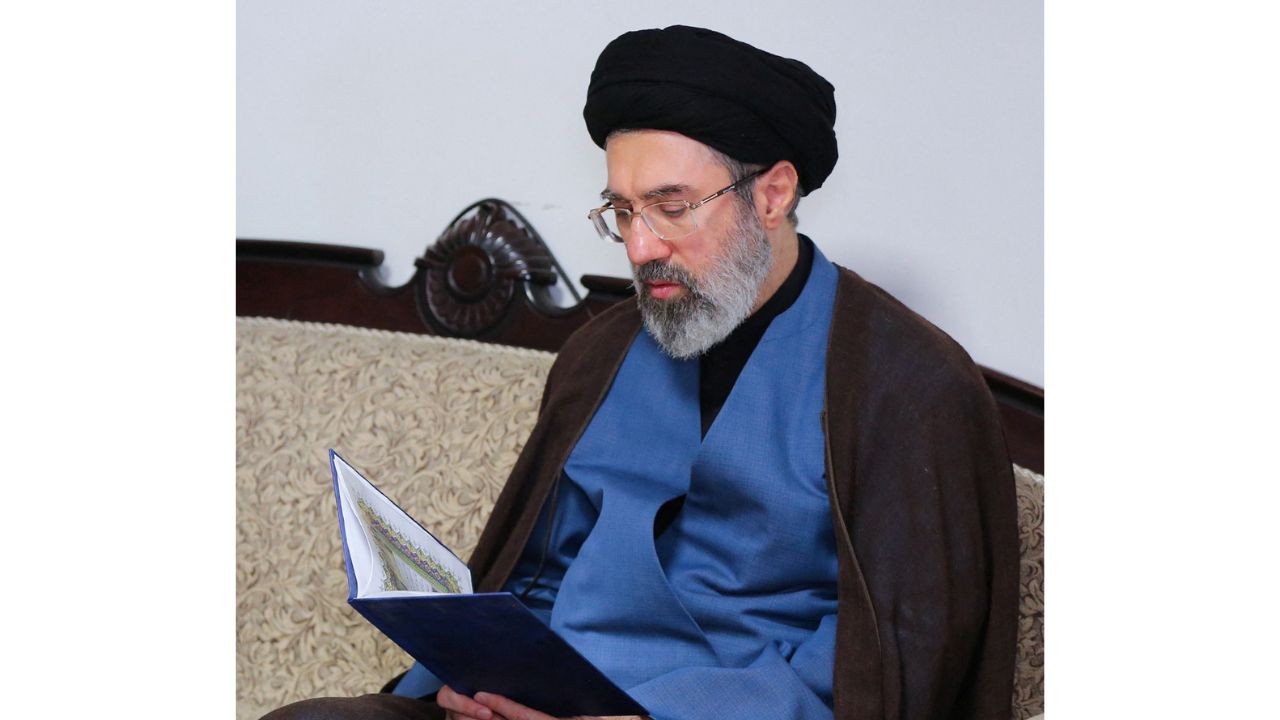
The transition of power within the Iranian clerical establishment is not merely a theological or political event; it is a massive reallocation of managed capital. For Mojtaba Khamenei, the consolidation of authority depends on the sophisticated integration of state-sanctioned monopolies with a global, non-transparent asset layer. The "Khamenei Empire" is better understood as a decentralized holding company that utilizes sovereign immunity to bypass traditional market friction.
Understanding the mechanics of this wealth requires moving past the sensationalism of "hidden billions" to analyze the specific economic engines used to capture and move value across borders. This network functions through three distinct operational pillars: domestic monopolization, the extraterritorial proxy economy, and the global real estate sink.
The Domestic Extraction Engine: Setad and the Bonyads
The foundation of the Khamenei financial structure is the Bonyad—a parastatal foundation that operates outside the purview of the Iranian parliament and tax authorities. The most significant of these is Setad Ejraiye Farmane Hazrate Emam (EIKO).
Setad functions as a predatory private equity firm with a unique legal advantage: the power of eminent domain under the guise of religious confiscation. Its portfolio is diversified across every critical sector of the Iranian economy, including telecommunications, energy, and pharmaceuticals. The economic logic here is simple:
- Zero Tax Liability: Unlike private competitors, Setad-controlled entities do not pay corporate taxes, giving them an immediate 20-25% margin advantage.
- Preferential Credit: These organizations receive subsidized loans from state banks, often at interest rates below the prevailing inflation rate, effectively resulting in a transfer of wealth from the Iranian public to the foundation.
- Market Captivity: By controlling the regulatory bodies that oversee their industries, these entities can block foreign competition and local startups, ensuring a perpetual monopoly.
Mojtaba Khamenei’s role has been to modernize this extraction. While his father, Ali Khamenei, focused on the ideological purity of these institutions, Mojtaba has transitioned them into a data-driven, corporatized model. This shift converted "revolutionary" assets into liquid capital capable of being offshored.
The Cost Function of Sanction Circumvention
Moving capital out of Iran requires overcoming a high "Sanction Tax"—the cost of obfuscating the origin of funds. This cost function is usually between 10% and 25% of the total transaction value. To minimize this, the network utilizes a "Global Shadow Financial System" (GSFS).
The GSFS operates through a series of front companies, primarily located in jurisdictions with weak Beneficial Ownership (BO) transparency laws. The logic follows a standard three-step laundering cycle:
- Placement: Funds are converted into hard currency (EUR or USD) through regional exchange houses (Sarafi) in Turkey or the UAE.
- Layering: The money is moved through multiple shells—often shell companies holding shell companies—across different legal jurisdictions (e.g., Hong Kong to Seychelles to the British Virgin Islands).
- Integration: The final "clean" funds are used to purchase high-value, low-velocity assets, such as luxury real estate or art, which serve as stable stores of value.
The efficiency of this system depends on sovereign bypass mechanisms. By using diplomatic pouches or state-owned shipping lines (IRISL), the network can physically move gold or cash to jumpstart the laundering process, bypassing the SWIFT monitoring system entirely.
Strategic Real Estate as a Capital Sink
Real estate is the preferred asset class for the Khamenei network because of its "opacity-to-value" ratio. Unlike liquid stocks or bonds, real estate allows for the use of "nominee shareholders"—individuals who legally own the property but have signed "Declaration of Trust" documents giving the actual control to the Khamenei associates.
The portfolio is strategically concentrated in "Global Safe Havens" where property laws are ironclad and the risk of sudden expropriation is low. This creates a paradox: the network decries Western capitalism while using Western legal protections to safeguard its wealth. The primary targets include:
- London (High-End Residential): The use of "Enveloped Dwellings" (owning property through a company rather than an individual) allowed the network to remain anonymous for decades. Even with recent transparency acts, the use of complex trusts makes identifying the ultimate beneficial owner (UBO) a legal marathon for investigators.
- Dubai (Commercial and Hospitality): Dubai serves as the "Regional Clearinghouse." The proximity to Iran allows for rapid physical transit, while the free zones provide a friction-free environment for setting up the front companies necessary for the layering phase.
- Southern Europe (Agricultural and Luxury Land): Buying large tracts of land in countries like Spain or Greece provides a secondary benefit: the "Golden Visa." By investing in these regions, network proxies can obtain residency or citizenship, granting them unrestricted movement within the Schengen Area.
The Risk Management of Succession
For Mojtaba Khamenei, the transition to Supreme Leader is a risk management exercise. In a regime where power is personal rather than institutional, the death of the patriarch often leads to the fragmentation of the asset network. To prevent this, Mojtaba has implemented a "Crony Management System."
He has systematically replaced the old-guard IRGC (Islamic Revolutionary Guard Corps) commanders with younger, loyal technocrats who are dependent on his patronage for their own wealth. This creates a Mutual Hostage Situation: the subordinates cannot defect because their wealth is tied to the central node (Mojtaba), and Mojtaba cannot purge them without destabilizing the financial infrastructure.
The primary threat to this structure is not domestic unrest, but intelligence-led financial warfare. If Western regulators can map the nominee shareholders back to the central node, the assets become "toxic," meaning they can be frozen but not easily sold or utilized.
Operational Limitations and Structural Fragility
No system of this scale is without bottlenecks. The Khamenei empire faces three critical vulnerabilities:
- The Dependency on Human Trust: Because the network relies on "nominee" owners, it is vulnerable to "Agent Defection." If a nominee decides to claim the property as their own, the Khamenei family has no legal recourse in a Western court without revealing their identity.
- The Transparency Trend: Global initiatives like the Corporate Transparency Act (USA) and the 6th Anti-Money Laundering Directive (EU) are closing the gaps that previously allowed for anonymous real estate purchases. The cost of maintaining anonymity is rising exponentially.
- The Liquidity Trap: High-value real estate is an illiquid asset. In the event of a sudden regime collapse, these properties cannot be liquidated quickly. They are "trapped capital" that can be seized by a successor government.
Strategic Forecast: The Pivot to Digital and Alternative Assets
As traditional real estate becomes easier for international bodies to track, the network is likely to pivot toward Digital Asset Custody and Private Credit Markets.
The next phase of Mojtaba's financial strategy will involve the tokenization of state assets. By converting oil futures or mining rights into blockchain-based tokens, the network can trade value with state actors like China or Russia without ever touching the USD-denominated banking system. This "On-Chain Sovereignty" would allow the Khamenei empire to bypass the Sanction Tax entirely.
The move toward a more digital, decentralized ledger for state wealth makes the network even more resilient to Western pressure. The strategic play for international observers is to shift focus from physical property records to the monitoring of "Cold Wallets" and crypto-exchanges operating within the "Axis of Resistance."
The consolidation of power in Tehran is now as much a matter of private key management as it is of military command. Any attempt to influence the Iranian succession must start with the disruption of these digital and physical capital flows, as the political legitimacy of the next Supreme Leader will be directly proportional to his ability to fund the vast patronage network he inherits.
Would you like me to analyze the specific shell company jurisdictions currently most favored by Iranian parastatal entities?